


Introduction
Talita has over 20 years of experience working with women who have been exploited in prostitution and human trafficking for sexual purposes. During our journey, we have seen the clear and undeniable link between pornography and prostitution, which is why we decided several years ago to officially expand our operations to include support for women exploited in pornography. Pornography is nothing more than documented prostitution. Someone or some people are having sex for payment, but it all takes place in front of a movie camera.
A woman we met in 2015, whom we will call Katja, told us that she entered the sex industry through pornography. The natural next step, according to Katja, was prostitution. Katja explained that prostitution was a nightmare, but pornography was even worse. She couldn't live with the thought that men were getting off on consuming her abuse and that the abuse would remain on the internet forever.
Since then, we have met many more than Katja – over 100 people, to be precise, who have been exploited in pornography. Just as with other forms of prostitution, those who are filmed for pornography are usually women and girls with a history of sexual abuse, poverty, and psychosocial problems. It is no coincidence that they are lured into the industry. Pimps are well aware that these young women lack protection and are therefore easier to exploit.
In our daily work, we see the consequences of prostitution for those who are subjected to it, regardless of whether it is filmed or not. But when sexual exploitation is documented and disseminated, it can be even more traumatic because the videos may end up online, accessible to everyone, forever. Our experience is supported by both Swedish and international research. Read the following reports for a more in-depth understanding of pornography and how it affects those who are filmed.

The legal situation in Sweden
Pornography production
Current situation
Is the production of pornography criminalized in Sweden? The short answer is no. But to understand the legal situation, the answer needs to be expanded upon considerably.
Swedish criminal law contains provisions that could be applied to the production of pornography, namely the provisions on procuring and human trafficking. The pimping provision in Section 6:12 of the Penal Code (1962:700) stipulates that a person is guilty of pimping if they “promote or, in an improper manner, financially exploit the fact that a person is induced to perform or submit to sexual acts in exchange for compensation, as referred to in Sections 9 or 11.” There is thus no linguistic obstacle to applying this provision to a producer of pornography at this time, but there are few court cases in which pornography production has been examined in relation to procuring.
One such case is the judgment of the Court of Appeal for Western Sweden in RH 2013:18. Charges were brought against a man who was first involved in a woman recording pornographic films and then began organizing for her to sell sex. In their text message conversations, they discussed both the filming of pornographic movies and his arranging for her to provide sex for payment “without a camera.” He suggested prices, posted ads on Adoos and “the pink pages,” and discussed including links to pornographic movies she had filmed as part of the marketing. The Court of Appeals examined whether his actions constituted pimping. They concluded that the acts—encouraging and organizing a woman to sell sexual services for compensation, as well as receiving a portion of the compensation—constituted promotion and improper exploitation, and the man was consequently convicted of pimping.
This is one of the few cases where porn production (filming) is explicitly mentioned in the background of charges that subsequently extend into the realm of prostitution/pimping.
In another court case from 2022 (Svea Court of Appeal, judgment 2022-06-15, case no. B 4927–22) (the Södertälje case), pornography production was examined in relation to the pimping provision. A woman had agreed to appear in a pornographic film to pay off a debt for a friend. She signed a contract while under the influence of alcohol and suffering from mental health issues. The men in the films paid 2,300 kronor to participate. The prosecutor argued that one cannot enter into a contract and consent to having sex; rather, one must make that decision on a case-by-case basis. The porn producer was convicted in district court of rape and pimping. The Court of Appeals, however, ruled that there was a contract and that the purpose was to film a movie, not to promote prostitution. Here is what the ruling states (p. 9):
The fact that Tomas Fu and the plaintiff traveled to Lars Kongstad's place of residence in Uddevalla, Lars Kongstad's statements about Tomas Fu's desire to create good conditions for filming, and Lars Kongstad's subsequent text message about himself as a movie star indicate that the purpose was to shoot a film. However, it is also clear from the evidence presented by the prosecutor that the sexual activities took place within the framework of Tomas Fu's and the plaintiff's company and that the remuneration was paid to that company. Regardless of whether the payment was intended for the production of a film or for the sexual intercourse as such, under these circumstances, it was not a case of procuring."
(Svea Court of Appeal, judgment 2022-06-15, case no. B 4927-22)
In other words, it seems difficult to obtain a conviction against a porn producer under existing legislation. However, Max Waltman, a senior lecturer in political science who has researched the area, is clear that legislation already exists that can be used to prosecute porn producers, but that it is almost never used and that Sweden is, in practice, underutilising its legal options. According to him, cases are dismissed with reference to the Freedom of Expression Act, even though it does not protect abuse in production.
If one were to consider criminalizing the production of pornography in and of itself, one must take into account the far-reaching legislation on freedom of the press and freedom of expression. If consent is given, the right to express oneself through, for example, images and film is very broad—even protected by the constitution. Pornography is thus legally considered a form of expression. As long as the material is not illegal in itself (e.g., child pornography, unlawful depictions of violence, defamation, crimes against national security), it is protected by the Constitution. In cases where pornographic content does not violate a criminal provision, it cannot therefore be prohibited.
The production, distribution, and possession of images depicting sexual abuse of children (child pornography) is already criminalized in Sweden. In order to make this possible, an exception had to be made to the protection afforded by the freedom of the press and freedom of expression laws through an amendment to the constitution. In the government public inquiry (SOU 2001:14) that preceded the bill entitled "New legislation on sexual offences" (2004/05:45), the pimping provision was discussed, as was whether it should also cover sex clubs and pornography production. The parliamentary committee behind the SOU stated the following:
"The proposed extension of the criminal provision on procuring entails such significant restrictions on the right of production and distribution that it conflicts with the constitutional freedom of establishment. A criminal provision of this kind also means that, in certain cases, criminal liability would apply to those who produce material that enjoys constitutional protection. Such a provision cannot be introduced without amendments to the Constitution. The committee has therefore refrained from proposing any new criminal provision of the kind mentioned in the directives."
But even though the production of pornography is not criminalized per se in Sweden, it is of course possible to prosecute a wide range of acts already today. Human trafficking, for example, involves the exploitation of a person. One way to exploit someone is to force or improperly coerce the person into participating in the production of pornography. It is therefore entirely conceivable that someone could be convicted of human trafficking in connection with the production of pornography—provided that the other elements of human trafficking are also met.
It is also possible that a pornography producer could be prosecuted for incitement or aiding and abetting rape or sexual coercion if it were found that consent was lacking from a person participating in the production.
There are currently no criminal law regulations regarding the dissemination or distribution of pornography (except in cases involving images of child sexual abuse). However, it is prohibited to display or show pornographic images in public places, or to send pornographic material to someone who has not requested it (Section 16:11 of the Swedish Penal Code). What the latter provision actually means, at a time when violent pornography is just a button press away on virtually every child’s cell phone, is open to debate.
In line with previous international studies, Talita’s research shows that many women used in pornography come from the same marginalized backgrounds as women in prostitution. Given this, and the fact that pornography production itself can lead to significant psychological and physical harm comparable to the harm women suffer in prostitution, it is illogical that pornography production is not regulated.
That said, the problem is that current legislation leaves too much room for interpretation, as evidenced by the lack of enforcement of the pimping and human trafficking provisions against pornography producers to date.
Between 2015 and 2022, Talita lobbied for the Swedish government to appoint a state commission to examine the harmful effects of pornography. In June 2022, an inquiry was established with the mandate to assess the current state of knowledge regarding adults who have been subjected to violence or other forms of abuse during the production or distribution of pornography, and to propose measures to ensure that those affected receive protection, support, and care. In the fall of 2023, the commission presented its findings in the report“Stronger Criminal Law Protection—Against Sexual Assaults, Fraud in Certain Cases, and Hate Crimes Based on Gender”(SOU 2023:98). One of the most important conclusions was that Sweden needs to ensure that support and care for individuals victimized in the production/distribution of pornography are available and accessible to those in need.
In parallel with the aforementioned inquiry, the inquiry“Out of Vulnerability”was also established to address exit programs for children and adults who have been exploited in prostitution. The report (SOU 2023:97) was presented in the fall of 2023. One of the most important proposals was that specialized, low-threshold services for vulnerable individuals should be introduced throughout the country.
The government has so far “responded” to the reports through Government Decision A2025/00637, which means that the Gender Equality Agency, the National Board of Health and Welfare, the County Administrative Boards, and the Swedish Agency for Health Technology Assessment and Assessment of Social Services (SBU) are tasked with preparing structures for exit programs and support for people vulnerable to prostitution and pornography, and a small amount of funding (approximately 3 million in total) is allocated for this work in 2025. The results are to be reported in interim reports in 2026, 2027, and 2029.
In conclusion, it can be noted that Sweden has taken steps toward providing support to individuals exploited in prostitution and pornography, but no inquiry has been established to examine the possibilities of regulating pornography production.
Ban on digital sex purchases
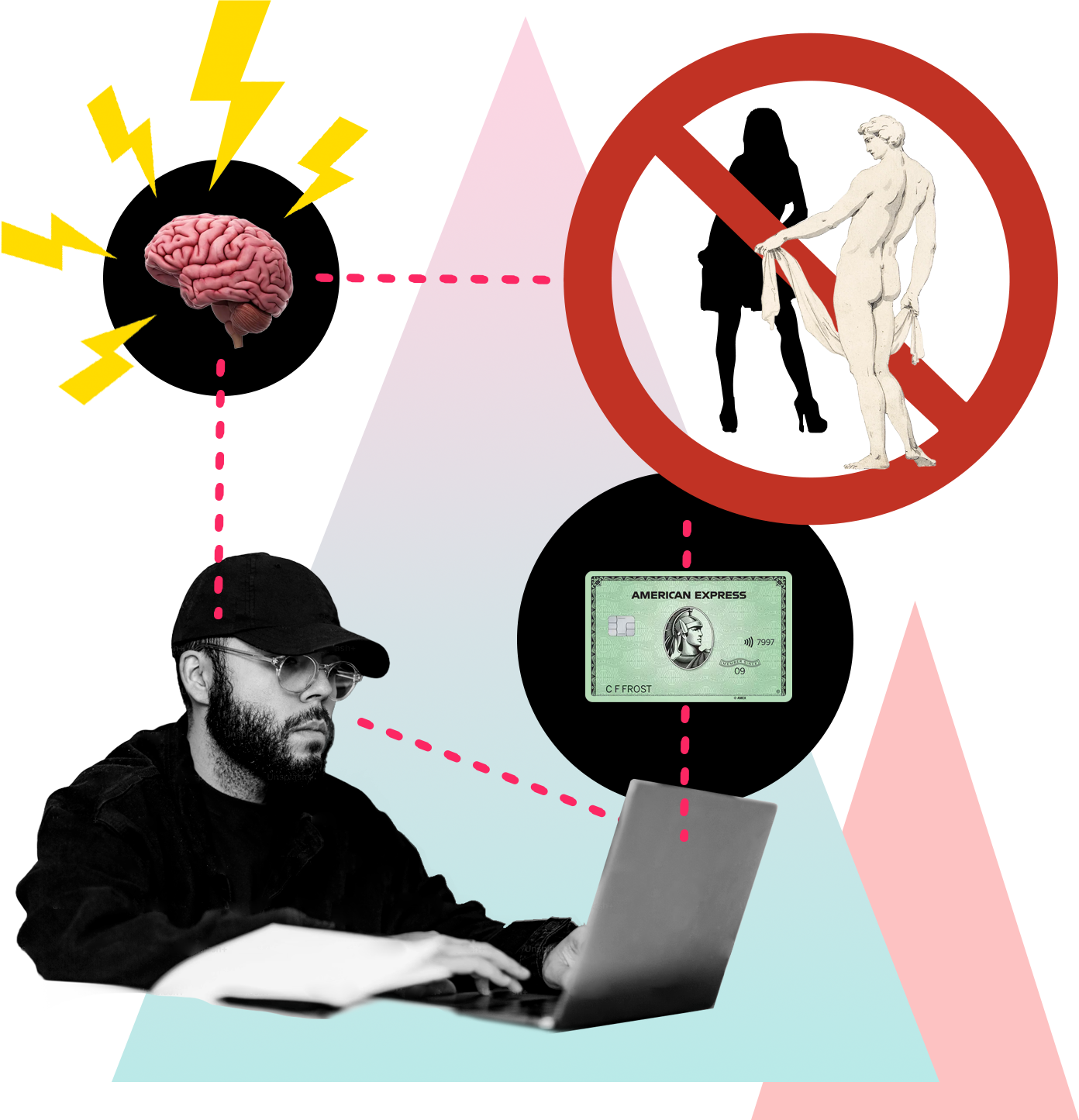
On July 1, 2025, an amendment to Chapter 6, Sections 11 and 12 of the Swedish Penal Code (BrB)—concerning the purchase of sexual acts and procuring, respectively—entered into force through Act (2025:586). The expansion means that criminal liability also applies to the purchase of sexual acts and procuring carried out via technical aids or otherwise without physical contact, which means that criminal liability also applies to acts performed remotely.
It can be said that, with this legislative change, Sweden criminalizes a specific type of pornography production, namely that produced with the primary purpose of being provided to the client or another designated person. The perpetrator must have induced the victim to perform or tolerate a sexual act in exchange for compensation. In other words, pornography distributed to an unspecified audience falls outside the scope of application, since the purpose of such production is not to display a sexual act solely for the person paying, but rather to “create a depiction that is in some way intended to be made available to the public” (quote taken from the report SOU 2023:80, p. 2).
In its response to the report (SOU 2023:80) that preceded the bill, Lund University pointed out that the legislation risked becoming inconsistent regarding the criminalization of sexual acts for compensation. They wrote the following: “The proposal would result in a certain type of pornography production—digital pornography made to order—being criminalized, while it is difficult to see why that particular production would be more harmful than other types of sex for compensation that are currently permitted, such as the production of pornography.” (source: Lund University, Ref. No. V2023/3116, p. 4).
The Jönköping District Court also expressed reservations in its response: “By expanding Section 11, the line between what is criminalized—such as the purchase of sexual acts—and what is constitutionally protected—in the form of pornography production—is further blurred. A question for the legislature is how much broader the criminalized area can become before there is reason to review the constitutional protection of pornography production.” (source: Jönköping District Court, Ref. No. Ju2023/02590, p. 2).
The report discussed whether the proposed expansion would infringe upon freedom of expression, and the conclusion reached was that this was not the case. The reasoning was that the criminalization does not target the visual material itself, which could still be possessed and distributed. Instead, criminalization focuses on how the material is obtained. The extension of criminal liability for the purchase of sexual acts and procuring to also apply remotely thus meant that the method of acquisition was criminalized, which does not conflict with the Constitution.
In Talita’s response to the inquiry, we stated the following:
“Talita’sextensive experience in providing support to women in prostitution, in all its forms, has clearly demonstrated that commercial pornography cannot be distinguished from other types of prostitution. It involves documented prostitution in which sexual acts are performed in exchange for payment, with the difference that a camera records the sex purchase. Our research and experience show that the path into pornography is often the same as the path into prostitution, characterized by abuse, poverty, and psychosocial problems. The consequences of prostitution are profoundly serious for those affected, regardless of whether it takes place in front of a camera or not, and include PTSD, chronic illnesses, dissociation, and more. However, the trauma that arises when one’s prostitution is documented and disseminated can be even more devastating, as the material becomes permanently available on the internet. These experiences are confirmed by both Swedish and international research, as exemplified by the report “Sexually Exploited for Pornographic Purposes,” SOU 2023:98.
The latest research report, "Invisible Victims," produced by researchers at Marie Cederschiöld University College on behalf of the aforementioned investigation, concludes that the harm and seriousness of sexual acts in exchange for compensation are comparable, regardless of whether the acts are digital or physical. The study emphasizes the importance of treating sexual exploitation on digital platforms with the same seriousness as physical sex purchases, to ensure that all victims receive adequate protection.
We at Talita are grateful that the inquiry has identified and acknowledged this need. We welcome the proposals that clarify the definition of the purchase of sexual services and thereby broaden the scope of the Act on the Purchase of Sexual Services. Our research and practical experience support the conclusion that remote sex buying has consequences comparable to those resulting from physical sex buying. Furthermore, the dissemination of documented prostitution online causes permanent harm because the material remains available indefinitely and fuels victims’ fear of being recognized and stigmatized.
The inquiry’s proposal to expand the legal regulation of “purchase of sexual acts” to also include acts performed remotely is an important step toward ensuring that society’s protection, support, and care extend to all victims of crime, regardless of where the crime was committed, whether the crime has been documented, and whether it has been disseminated. However, we strongly question the inquiry’s distinction between what is termed “traditional pornography production” and remote-based sex buying. Our response highlights how this distinction favors the interests of porn producers over those of the victims, despite the fact that producers play a dual role as both buyers and pimps, where they first pay for sexual acts and second earn money from the documented sex purchase.
Exempting pornographic material produced for the general public, rather than for individual buyers, from criminal liability fails to take into account the testimonies of victims and survivors that the most traumatic aspect of their paid sexual acts being documented is precisely that they are disseminated to the general public. Furthermore, we take issue with the proposal that subscriptions to sites such as OnlyFans be exempted from criminal liability. We urge policymakers to critically reevaluate these conclusions and proposals to ensure that the Sex Purchase Act covers all types of paid sexual acts, that perpetrators are held accountable, and that all victims of sexual violence and exploitation receive the protection they need.”
Possible ways forward
Are you saying that pornography as content should be criminalized?
In legal terms, pornography is defined as sexually explicit depictions, which in and of themselves are not illegal. The legislature takes a different view of child pornography (i.e., images of child abuse) and adult pornography. Freedom of speech and freedom of the press are constitutionally protected rights that carry significant weight in the balancing of rights under Swedish law. These rights may be restricted to protect other interests.
Child pornography is not protected under the Freedom of the Press Act or the Freedom of Expression Act. This is due to the interests at stake: a child’s privacy and sexual autonomy take precedence over freedom of expression. The state considers any depiction or distribution of children in sexual situations to be an abuse in itself, regardless of whether the child “consented” or not. Therefore, even the production and possession of such material are criminalized.
Adult pornography, on the other hand, is considered a form of expression protected by the substantive provisions of the Freedom of the Press Act and the Freedom of Expression Act, as well as by adults’ right to sexual self-determination. The state does not consider itself to have a general basis for prohibiting sexually explicit material between adults as long as it is consensual and within the bounds of the law.
We believe this is reasonable as long as payment is not involved. Adults can consent to having sex (and they can jointly choose to film and distribute the material), but as soon as payment is involved (which is a form of bribery), the Sex Purchase Act establishes that it constitutes the purchase of sexual services, which is illegal, and the pimping legislation prohibits others from profiting from someone’s prostitution. If there is no camera in the room, this is obvious to everyone. But as soon as there is a camera in the room, there is a high risk that the courts will view it as a “normal film production.”
So what does Talita think lawmakers should do?
Banning pornography in general requires content-based assessments that are widely considered, in principle, impossible for a state governed by the rule of law to implement. However, it is entirely possible to criminalize exploitation in the production of pornography. We believe that the fact that someone is paid to participate—just as in prostitution—constitutes exploitation per se.
Even today, pimping is prohibited even if the victim “consents.” The Pimping Act (Chapter 6, Sections 12–13 of the Penal Code) makes it illegal to: promote, facilitate, organize, profit from, or provide premises for the sale of sexual services. This applies even when the person says she is doing it voluntarily. The law thus does not protect the free market—it protects the vulnerable person. This means that Swedish law already accepts that the commercialization of others’ sexuality is harmful in itself. It is this logic that we believe should also be applied to pornographic production.
What is needed, therefore, is for Sweden to:Explicitly criminalize commercial pornography production as pimping
So what happens if one criminalizes pornography production in the same way as pimping? In practice, one would say: “Organizing, producing, filming, distributing, and profiting from pornographic content in which someone participates constitutes the exploitation of that person’s sexuality.” It would thus not be classified as a content-related offense (which is protected by freedom of expression), but rather as an exploitation offense (such as pimping). For this to become a reality, all that is required is the introduction of a provision in the Penal Code with the following wording:
“Anyone who produces or provides pornographic images or films of another person for profit shall be convicted of sexual exploitation.”
Why is this consistent with freedom of speech? Because the Freedom of the Press Act protects the publication itself, not the process behind it. However, without a constitutional amendment, it is not possible to impose a total ban on all pornographic material (a content ban), prohibit private individuals from making sexual films of themselves, or prohibit people from viewing sexualized images in general.

Research
Pornography conceals violence and exploitation
Pornography has long been described as "just fantasy" and "entertainment." But at Talita, we encounter a different reality: women whose bodies and boundaries have been exploited—and who then have to live with the consequences, often in silence and solitude.
That is why Talita has been clear that the debate needs to shift focus. Instead of focusing almost exclusively on consumption, we need to start with those who are exposed. This is also the starting point for our research director Meghan Donevan's research, which highlights people who have been filmed themselves. When we take their stories, health, and living conditions seriously, a picture emerges that differs greatly from the one often painted by the industry. What is called "pornography" is about repeated victimization, violence, exploitation—and about damage that can linger long after the filming is over.
Meghan's research has also contributed to a government inquiry into protection, support, and care for people who have been victimized in connection with pornography production and distribution. It clearly shows that people who are filmed in commercial pornography belong to a highly vulnerable group, and that many of them are victims of crime who have long fallen between the cracks. Paradoxically, they become "visible" to many online, but invisible as victims of crime – in terms of treatment, care, support measures and the legal system.
Meghan's research combines quantitative and qualitative methods to understand what "pornography" means in practice for those who are filmed, the path into exploitation, and the consequences. The studies have been conducted in collaboration with several actors, which has made it possible to reach people with very different experiences. Her quantitative study involved 120 adults in Sweden who had been documented in commercial pornography (88% women). The participants answered questions about their background, experiences, and health and completed established assessment scales, including for PTSD and dissociation. The qualitative articles are based on in-depth interviews with 28 of these participants, in which they—after completing the questionnaires—also talked about their lives and their path into pornography.
Paths to exploitation
One of the most obvious patterns in the material is that those who end up in pornography come from a childhood marked by violence, neglect, and systematic betrayal. Virtually all (96%) of the participants in the quantitative material had already been subjected to at least one form of abuse as children: 88% reported sexual abuse, 90% psychological violence, and 79% physical abuse.
For many, exploitation began at an early age. The material highlights that 77% were exploited for pornographic purposes as children. The stories further showed how pornography was either part of or an extension of the violence and betrayal they had experienced long before they were lured into the sex trade.
A recurring experience was also that they never received help to process what they had been through, despite clear signs that they were not well. When support and trauma care were not provided, it became the beginning of a spiral of continued vulnerability, where survival—financial, physical, and psychological—became the central driving force.
Several described how “self-produced” pornography became an attempt to regain some form of control after having been controlled and exploited for a long time. But the same basic feeling recurs in the stories: that they lived in a world where they had learned that men take what they want – and that their bodies can be used, pressured and exploited.
Vulnerability in connection with pornography production
The studies show that many experience violence and control directly related to being filmed. In the quantitative study, participants reported, among other things, rape (65%), physical abuse (56%), and control by a third party (56%), i.e., a pimp or human trafficker.
Almost all (86%) had experience of “conventional” (offline) prostitution, and many had been filmed while being exploited in prostitution. For them, these were not two separate worlds. It was the same market, the same buyers, and the same power dynamics, just in different formats.
The stories clearly show how commercial pornography cannot be separated from prostitution. The pattern is familiar: the acts are not performed based on the person's own desire and sexuality—on the contrary, it is about having to shut down and distance oneself as much as possible through dissociation, substances, and other survival strategies. Regardless of the form of prostitution, it is clear that women are forced to play a role in order to fulfill the buyer's fantasy—all of them described the buyers as unsympathetic men who exploit the vulnerability of others for their own pleasure.
Digital dissemination and online violence
Even when the act itself resembles offline prostitution, the documentation and dissemination mean that the victimization can continue—sometimes for the rest of their life. The material can be re-uploaded, copied, shared, appear on new sites, and be used by others without the person's control. The "immortality" created by the internet becomes a constant source of fear for many.
In the quantitative material, participants described extensive online violence. Fifty-seven percent reported being subjected to online harassment, 36% to doxing (the dissemination of personal information), 43% to sextortion (sexual blackmail), and 42% to stalking. Two-thirds also described ongoing stress about the material remaining online forever.
The interviews reveal a recurring theme: a constant fear of being recognized, and a sense of shame that others may misinterpret their involvement as voluntary. This shame is particularly heavy because pornography in our culture is often associated with "voluntariness," while their reality has been one of vulnerability, pressure, and violence. The documentation means that what has happened can continue to cause harm long after the person has tried to leave. For many, it becomes a lifelong fear of recognition, blackmail, and the feeling of never being free.
Serious consequences for mental health
The consequences of prolonged and repeated violence are also evident in the participants' health. In the study, 84% met the criteria for post-traumatic stress disorder (PTSD), and 60% had clinically significant dissociative symptoms. 69% had attempted suicide at least once. 80% had received at least one psychiatric diagnosis (in some cases up to nine), and 45% had been diagnosed with a disability, most commonly autism or ADHD.
Overall, research points to a reality where pornography is not about sex, but about exploitation. It is about people who have been betrayed and victimized early in life—and who then end up in an industry where their vulnerability is used for the gain of others. And because it is documented and disseminated, the damage follows them even when they try to escape.
What does society need to do?
Much needs to be done to ensure that these victims—who, paradoxically, may be visible to many but invisible to the protection systems—receive the protection, support, and care to which they are entitled. There is a pressing need for early intervention to protect children at risk of abuse and to identify those who have already been subjected to sexual violence. This involves, among other things, better detection and screening in schools, healthcare, and social services, and an approach based on trauma rather than shame and mistrust.
Those who have been victimized also need to be referred to specialized units that can offer trauma care and long-term support. But perhaps most important of all is a societal awakening: that we stop treating pornography as an exception to what we otherwise know about prostitution, violence, and power. Those who are filmed must be recognized as victims of crime and as human beings with inherent value.
In order to truly recognize them as victims of crime, society must also take digital sexual crimes as seriously as those committed physically. That is why the law on digital sex purchases is so important. It makes it clear that sexual acts in exchange for payment do not cease to be sex purchases just because they take place on screen – and it helps us to reduce the gap where exploitation has been able to hide behind the word "pornography".
Links
Donevan, M., Jonsson, L. S., & Svedin, C. G. (2025). The experience of individuals filmed for pornography production: a history of continuous polyvictimization and ongoing mental health challenges. Nordic Journal of Psychiatry, 79(2), 156–165. https://doi.org/10.1080/08039488.2025.2464634
Donevan, M., Svedin, C. G., Dennhag, I., & Jonsson, L. S. (2025). Behind the Illusion: Unmasking the Coercion in Pornography Production. Violence Against Women, https://doi.org/10.1177/10778012251319300
Donevan M. (2025). Exposing pornography's true nature: A conceptual framework. Women's Studies International Forum, https://doi.org/10.1016/j.wsif.2024.103029
Donevan, M., Jonsson , L., & Svedin, C. G. (2023). Invisible victims of crime – Interview study among people who have been filmed or photographed for pornographic production. Stockholm : Marie Cederschiöld University.https://esh.diva-portal.org/smash/record.jsf?pid=diva2%3A1819066&dswid=7641
Other research:
Reports
Donevan, M. (2019). If You Can’t See It, It Doesn’t Exist: An Insight into the Swedish Porn Industry. Stockholm: Talita.
https://cdn.prod.website-files.com/5dca82ba9193d035ec4bb598/642c7292131dd647982c7c26_Rapport_synsmaninte_finnsmaninte_SV.pdf
Donevan, M., Jonsson, L., & Svedin, C. G. (2023). Invisible victims of crime: Interview study among people who have been filmed or photographed for pornographic production. https://esh.diva-portal.org/smash/record.jsf?pid=diva2%3A1819066&dswid=1202
So, L., Marshall, A. R. C., Ilie, L., & Szep, J. (2024). Enslaved on OnlyFans: Women describe lives of isolation, torment, and sexual servitude. Reuters. https://www.reuters.com/investigates/special-report/onlyfans-sex-trafficking/
Swedish Ministry of Employment. (2023). Sexual exploitation for pornographic purposes: vulnerability that needs to be made visible (SOU 2023:97). Swedish government offices. https://www.regeringen.se/rattsliga-dokument/statens-offentliga-utredningar/2023/12/sou-202398/
Waltman, M. (2016). Demand: Pornography and men's violence against women. In Pornography and prostitution: A report on pornography, prostitution, and men's violence against women (pp. 31–106). Unizon. https://www.unizonjourer.se/aktuellt/rapporter/unizons-rapport-om-porr-och-prostitution/
Research articles
Bridges, A. J., Wosnitzer, R., Scharrer, E., Sun, C., & Liberman, R. (2010). Aggression and sexual behavior in best-selling pornography videos: A content analysis update. Violence Against Women, 16(10), 1065–1085. https://doi.org/10.1177/1077801210382866
Donevan M. (2025). Exposing pornography's true nature: A conceptual framework. Women's Studies International Forum, 109, 103029. https://doi.org/10.1016/j.wsif.2024.103029
Donevan, M., Svedin, C. G., Dennhag, I., & Jonsson, L. S. (2025). Behind the Illusion: Unmasking the Coercion in Pornography Production. Violence Against Women, https://doi.org/10.1177/10778012251319300
Donevan, M., Jonsson, L. S., & Svedin, C. G. (2025). The experience of individuals filmed for pornography production: a history of continuous polyvictimization and ongoing mental health challenges. Nordic Journal of Psychiatry, 79(2), 156–165. https://doi.org/10.1080/08039488.2025.2464634
Donevan, M. (2021). “In This Industry, You’re No Longer Human”: An Exploratory Study of Women’s Experiences in Pornography Production in Sweden. Dignity: A Journal of Analysis of Exploitation and Violence, 6(3). https://doi.org/10.23860/dignity.2021.06.03.01
El-Khoury Lesueur, F. E. K., Héroin, V., & Fareng, M. (2024). Mental health and perceived consequences in a clinical sample of women featured in video-based pornography. European Journal of Trauma & Dissociation, 8(4), 100482. https://doi.org/10.1016/j.ejtd.2024.100482
Gewirtz-Meydan, A., Walsh, W., Wolak, J., & Finkelhor, D. (2018). The complex experience of child pornography survivors. Child Abuse and Neglect, 80, 238–248. https://doi.org/10.1016/j.chiabu.2018.03.031
Grudzen, C. R., Meeker, D., Torres, J. M., Du, Q., Morrison, R. S., Andersen, R. M., & Gelberg, L. (2011). Comparison of the mental health of female adult film performers and other young women in California. Psychiatric Services, 62(6), 639–645. https://doi.org/10.1176/ps.62.6.pss6206_0639
Grudzen, C. R., Ryan, G., Margold, W., Torres, J., & Gelberg, L. (2009). Pathways to health risk exposure in adult film performers. Journal of Urban Health, 86(1), 67–78. https://doi.org/10.1007/s11524-008-9309-4
Jonsson, L., Göran Svedin, C., & M. Hyden. (2014). Young women selling sex online – narratives on regulating feelings. Adolescent Health, Medicine and Therapeutics, 6, 17-27. https://doi.org/10.2147/AHMT.S77324
Tyler, M. (2015). Harms of Production: Theorizing Pornography as a Form of Prostitution. Women's Studies International Forum, 48, 114-123.
Vera-gray, F., Mcglynn, C., Kureshi, I., & Butterby, K. (2021). Sexual violence as a sexual script in mainstream online pornography. British Journal of Criminology, April, 1–18. https://doi.org/10.1093/bjc/azab035
Whisnant, R. (2016). Pornography, humiliation, and consent. Sexualization, Media, & Society, https://doi.org/10.1177/2374623816662876
Books
Purcell, N. (2012). Violence and the pornographic imaginary: The politics of sex, gender, and aggression in hardcore pornography. Routledge.
Rung, N. (Ed.). (2021). The Big Book of Porn: A book about porn and its impact on the brain, heart, and behavior. Rebel Books
Waltman, M. (2021). Pornography: The Politics of Legal Challenges. Oxford University Press.
Statistics
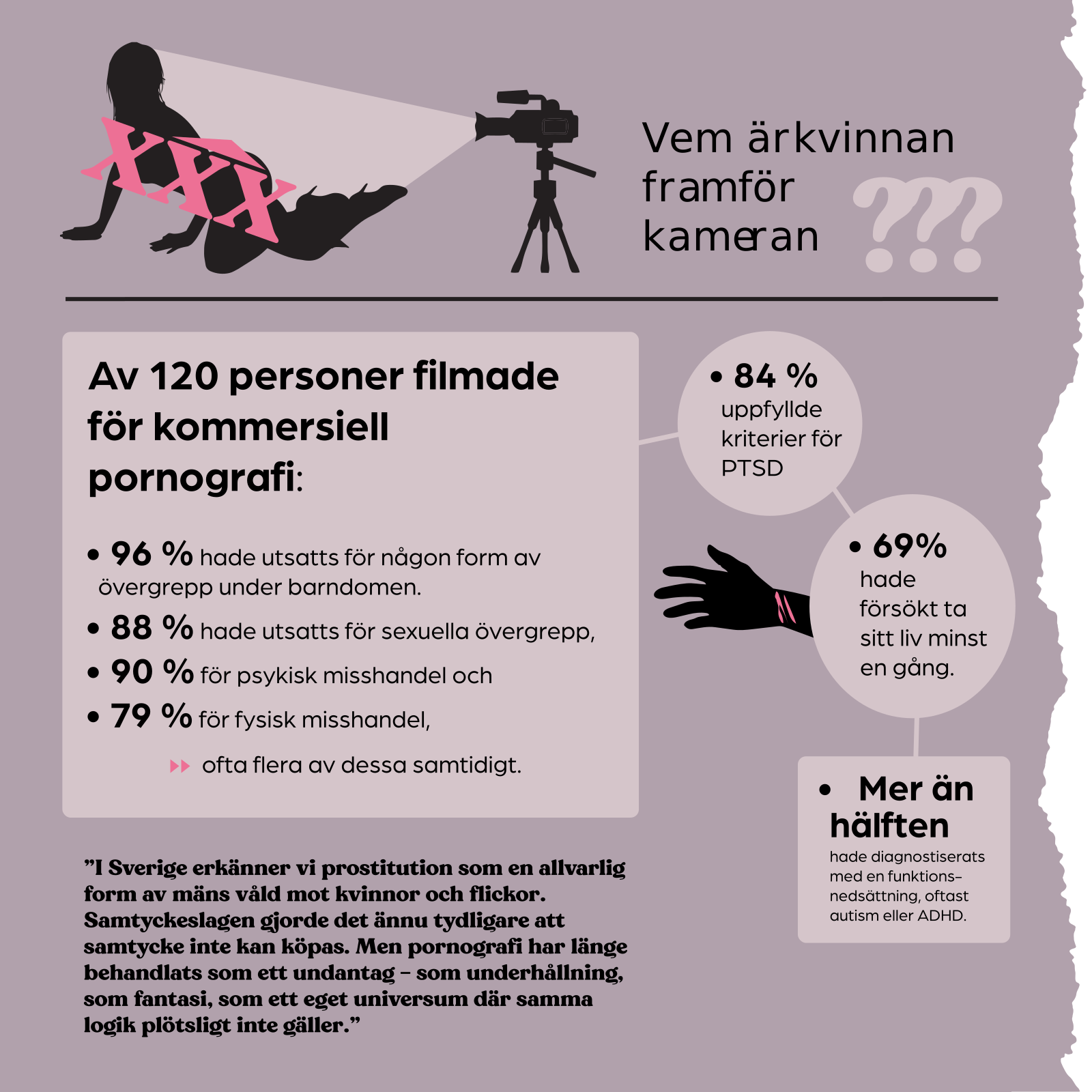
Source: Meghan Donevan, Research Director at Talita. https://www.parabol.press/porrens-morka-baksida/
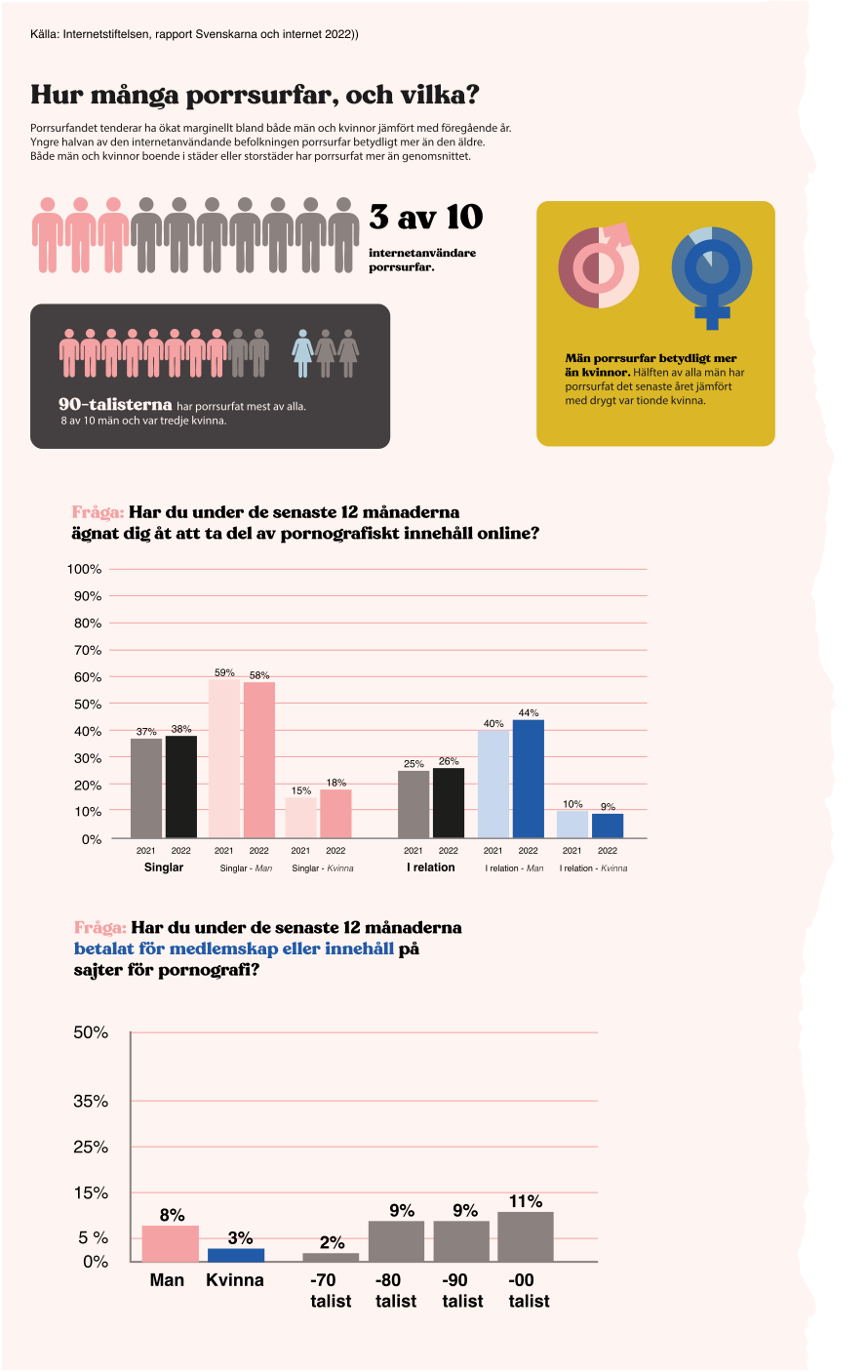
Source: Internet Foundation, report Swedes and the Internet 2022
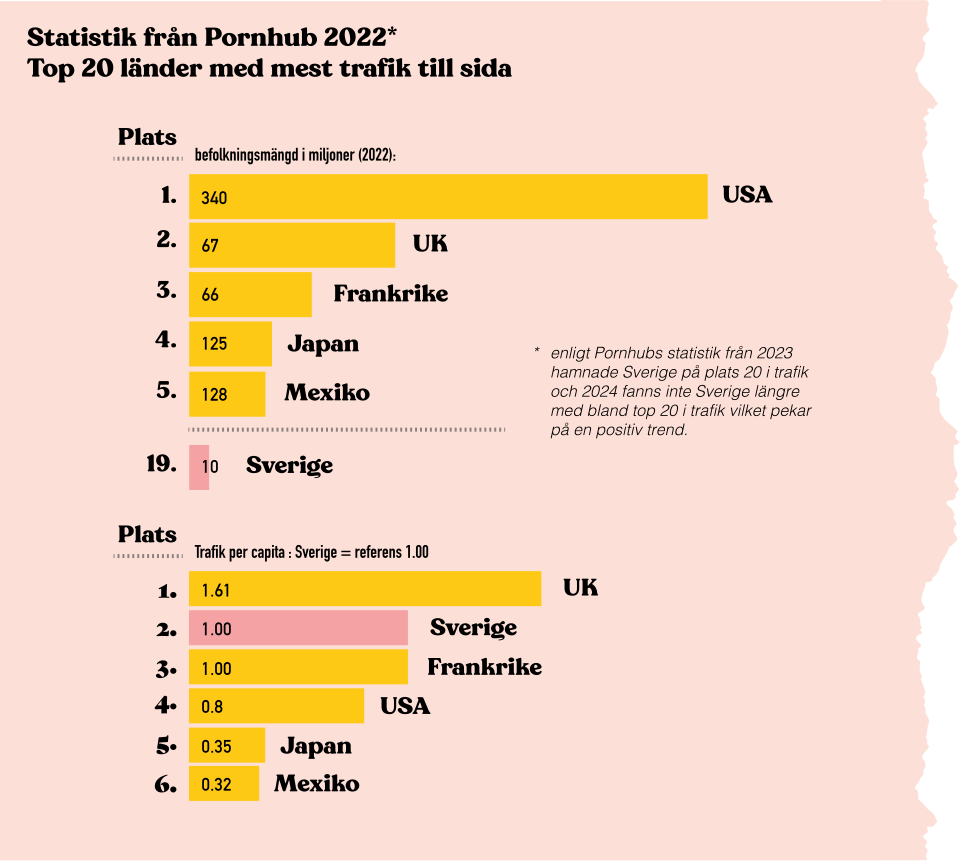
Statistics from Pornhub 2022* Top 20 countries with the most traffic to the site.
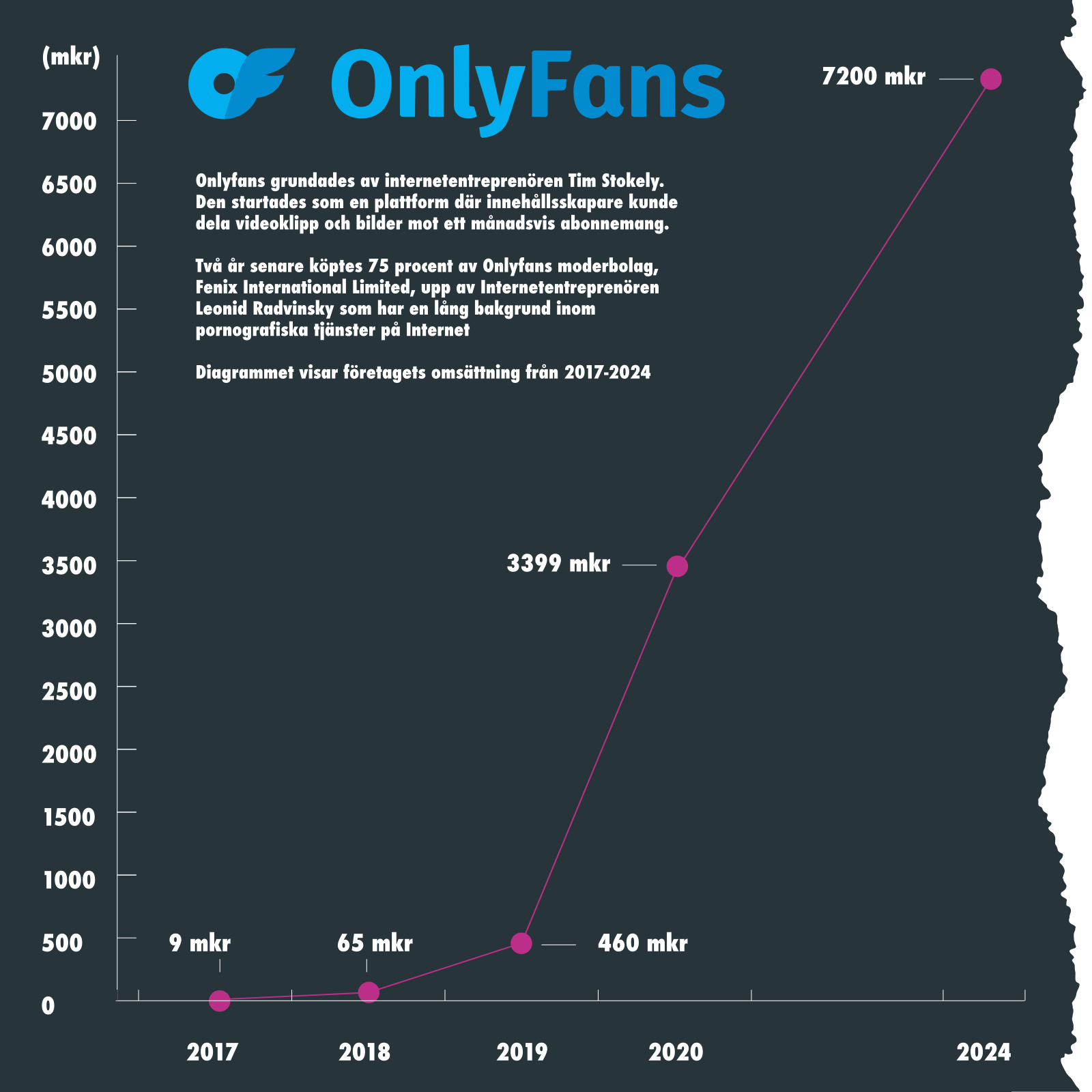
Only Fans revenue statistics, source: Source: Fortune, Statista, Variety + Wikipedia for descriptive text
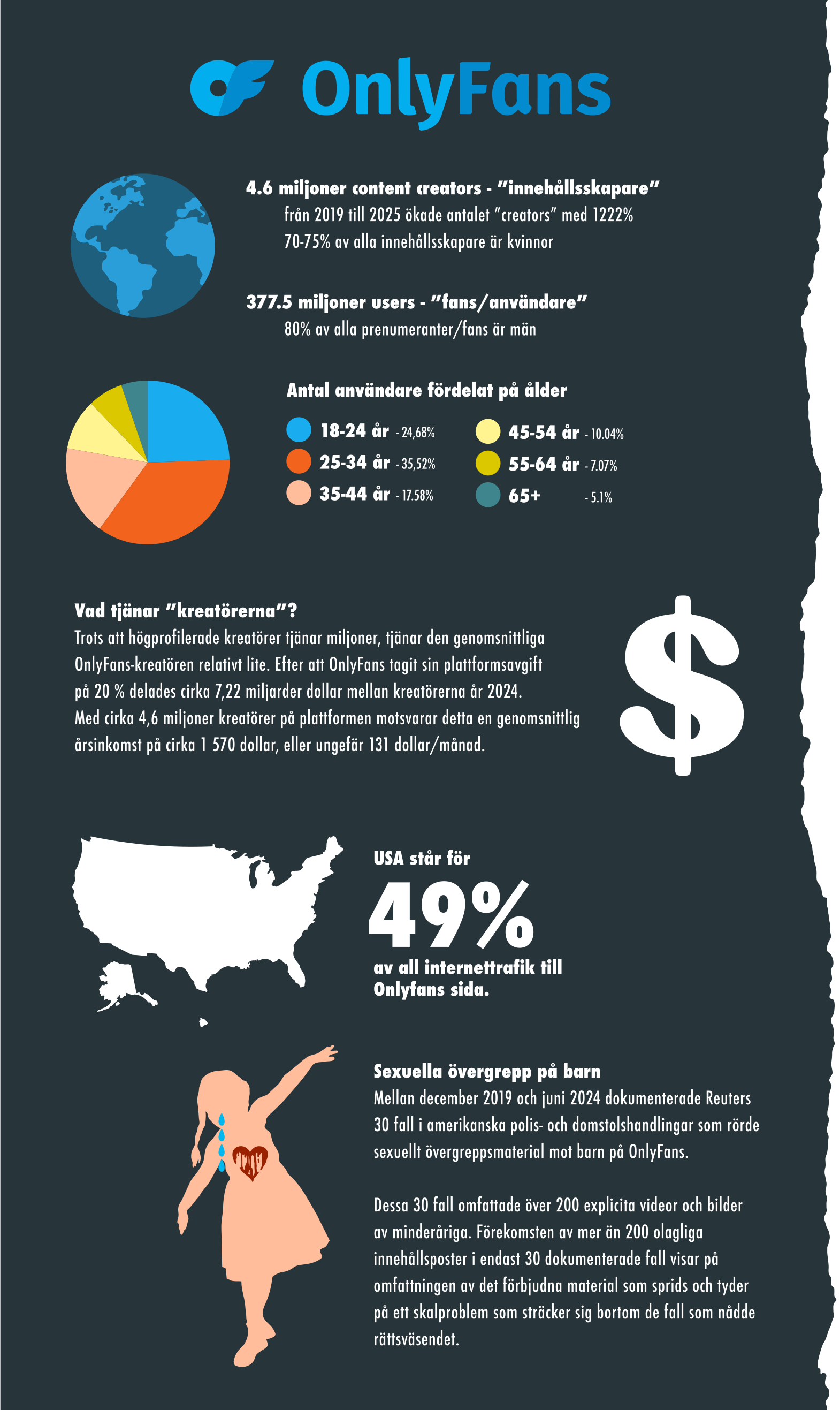
Only Fans statistics, source: TOI, Similarweb, Statista, USA Today